- The Host Report Newsletter
- Posts
- Vacation Rental News & Insights
Vacation Rental News & Insights
Why the $300-a-night hotel room is dying, and what it means for vacation rentals

Dom Trovato
April 29, 2026
Good morning,
Here’s what’s going on in the vacation rental world this week:
Vrbo just crowned its 2026 Vacation Rentals of the Year, a new report shows Airbnb taking 50% of U.S. reservations as direct bookings shrink, and we break down the death of the $300-a-night hotel room and what it means for vacation rentals.
Lets dive in.

NEWS
Headline Roundup
New Q2 2026 report shows Airbnb captures 50% of U.S. Reservations as Direct Bookings Slide (The Host Report)
Vrbo names its 2026 Vacation Rentals of the Year (Vrbo)
250,000 Google Ads Are Targeting Hospitality Brand Names (The Host Report)
Chase Travel adds luxury vacation home rentals to portal with Plum Guide (The Points Guy)
Hilton launches first Airbnb-style properties under new Placemakr partnership. (Hotel Dive)
UK developer Salboy enters vacation rental market with its own brand Hidden (Yahoo News UK)
New report charts the rise of the "hospitality engineer" role in fragmented STR tech stacks (RMS Cloud)
Guesty launches ReplyAI Autopilot and AI Task Creation (PR Newswire)
eviivo launches Device Manager to centralize smart lock and access control (eviivo)
INTERESTING INSIGHTS
Why the $300 hotel room is dying, and what it means for vacation rentals
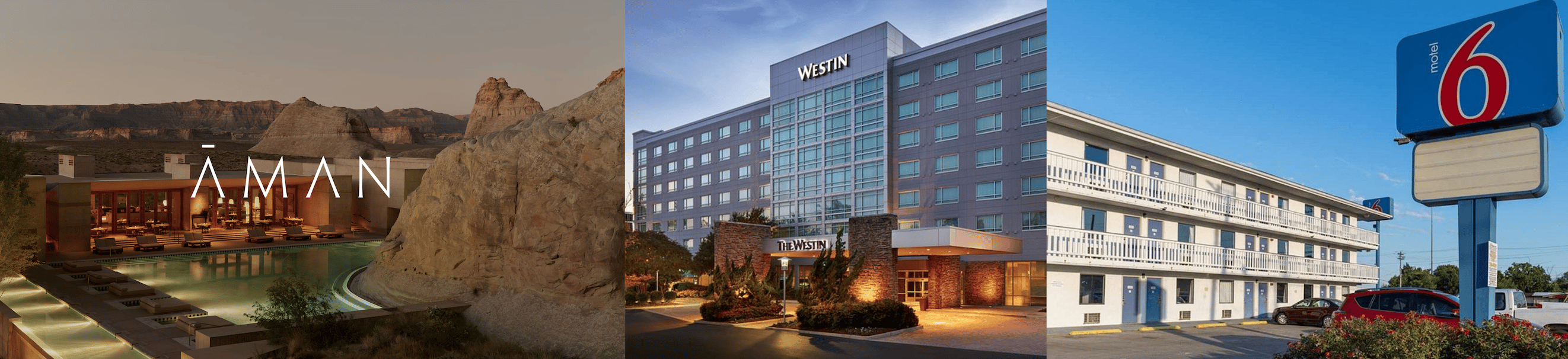
Aman charges $3,500+ a night and they can't build resorts fast enough. Motel 6s continue to post strong 75%+ occupancy. But hotels in the $300-a-night range like The Westin, DoubleTree, and Hyatt Place are dying.
The most interesting thing I read this week was an article by Paul Stanton calling the $300-a-night hotel room the most dangerous price point in real estate. He described what folks call “the K-shaped economy”, and how it's showing up in real estate. I agree that the $300 hotel room is dying… but I think it actually presents a big opportunity for short-term rentals.
The K-shaped economy
Stanton applied the K-shaped economy thesis across different types of real estate. Essentially, the luxury category thrives because the ultra-wealthy don't care about the price. The bottom thrives because people will always need a cheap place to stay. But the middle collapses because the customer it was built for is being squeezed out. A few examples:
Residential: Workforce housing and Aspen mansions are both booming. But the $800K spec home in a mid-tier suburb is sitting on the market.
Retail: Dollar General opens 1,000+ stores a year. Hermès has waitlists for a "leather appointment." While J. Crew and Pottery Barn are fighting for survival.
Office: Trophy towers are leasing while Class B and C (the "good enough" middle) are sitting empty.
Restaurants: The $12 lunch and the $500 tasting menu both work. It’s the place with a $45 entrée that has empty tables.
Hospitality: Aman has guests who’ll drop six figures on a single booking, and Motel 6 stays full because it serves a need for a large part of the population. But it's the hotels built for the “aspirational middle” that are holding on for dear life.

The opening this creates for vacation rentals
Here's the bright side: the well-off traveler (wealthy, but not in the top 1%) still has plenty of money to spend. By volume and by spend, they're the largest segment in luxury. And they're tired of big hospitality brands that seem to serve shareholders first and guests second.
The hotel chains are losing that traveler because they have to standardize and optimize for scale, RevPAR, and quarterly earnings. That's why everything in the middle of the hotel market feels the same: same Edison bulbs, same reclaimed wood, same farm-to-table menu, same $325 nightly rate.
So the hotels aren’t dying because well-off travelers can't afford the vacation. It's because their customers don't see the value. Which means that vacation rentals have a massive opportunity to serve that traveler in a way no $300-a-night hotel chain can.
What to do about it
A well-thought-out and intentionally designed vacation rental is genuinely a better product than a nationally branded $300-a-night hotel room.
The key competitive advantage for vacation rentals is that each one is unique. Hosts can capitalize on that by being locally authentic, niched down, and operationally lean. We can tailor our properties for a specific kind of guest, and we’re not bogged down by national brand standards.
What I see working best across the vacation rental industry are operators who niche down. They pick a guest type: wellness travelers, golfers, climbers, families with toddlers, whatever - and build the entire experience for that person. Birdiehouses (golf-obsessed vacation rentals) is a great example. They alienate the 95% of travelers who don't golf, that's the point, and it's working.

Image credit: Birdiehouses
So have a point of view. Have some conviction. Let the conviction be informed by good taste and a willingness to disappoint people who aren't your ideal guest. That's what most hotels operating in "lifestyle" hospitality can't compete with.
My point is, I agree that the $300 hotel room is dying… but something has to fill that gap in demand. And the vacation rental hosts who fill that gap won't do it with better towels and high thread count sheets, they'll outcompete the hotels by being unmistakably for someone.
MARKET INSIGHTS
Mortgage Rate Snapshot

Mortgage rates held in a tight range near 6.32% through Friday before climbing to 2-week highs Tuesday. The Iran war remains the main driver, and the Fed meets this week with no rate change expected.
Regulations Update
Kansas City set a May 5 deadline for hosts to apply for a $50 Major Event STR permit covering the 2026 World Cup, with a $200 renewable annual permit available for year-round operations
Los Angeles is considering Mayor Karen Bass's budget proposal to allow second-home and investment STRs through December 31, 2028 in exchange for Airbnb prepaying transient occupancy taxes
Arapahoe County, Colorado is voting on a proposal that would limit STR licenses to primary residences, require 500 feet of separation between rentals, and mandate a 60-minute complaint response time
Carson City, Nevada is reviewing rules allowing one STR per property with two-people-per-bedroom occupancy limits, annual code inspections, and a 30-minute phone-response requirement
See this weeks full regulations report here: (The Host Report)