- The Host Report Newsletter
- Posts
- Vacation Rental News & Insights
Vacation Rental News & Insights
Travel Tuesday is coming, and guests are ready to spend

Dom Trovato
November 26, 2025
Good morning,
Here’s what’s going on in the vacation rental world this week:
New data shows 40% of U.S. travelers plan to book direct in 2026, a survey of 1,400 hosts tells us that despite new AI tools - admin work is still the biggest drag, and Rocket Mortgage rolls out a new DSCR loan option that caters directly to Airbnb investors.
On the regulations front: Atlanta city council votes against a Airbnb ban, Aspen reduces admin friction with simplified renewals and 90-day permits, and Green Bay backs away from a strict 180-day limit yet continues exploring a three-strike nuisance policy.
Lets dive in.

NEWS
Headline Roundup
Survey of 1,400 hosts shows AI isn’t helping, admin tasks remain the biggest burden (The Host Report)
40% of U.S. travelers plan to book direct in 2026 (The Host Report)
Brands like Kasa and Lark move quickly to claim Sonder leases as the platform unravels (Hotel Dive)
Airbnb tests Instacart partnership with host compensation (The Host Report)
New analysis finds fewer long-term rentals and higher rents in a city with strict STR limits (Airbnb News)
Airbnb CTO Aristotle Balogh to depart in December (Nasdaq)
NYC mayor opposes bill to loosen STR restrictions (New York Post)
Severe cold weather threatens Thanksgiving travel plans nationwide (Realtor.com)
October U.S. market review shows uncertainty and high costs weighing on STR performance (AirDNA)
New survey highlights major changes in Gen-Z travel habits (Forbes)
Rocket Mortgage launches DSCR loan product amid rising investor demand (National Mortgage Professional)
Hospitable launches integrated owner payments (Travolution)
Premier Pads acquires Hoste in 150-unit deal (VRM Intel)
Finest Retreats acquires Forgotten Corner (Cornwall Live)

INTERESTING INSIGHTS
Travel Tuesday Is Coming, And Guests Are Ready To Spend
Travel Tuesday has become a big day for hospitality in the post-Thanksgiving sales cycle. It falls on the Tuesday after Black Friday and Cyber Monday, and it’s now one of the biggest deal days for travel. Airlines, hotels, and hospitality brands use it to drop short, high-value promos on flights, stays, cruises, and vacation packages.
The numbers show how fast the event is scaling. McKinsey reports search interest for “Travel Tuesday” is up more than 500% since 2021. Industry data shows that in 2024, travelers planned roughly 3.5 times more trips on Travel Tuesday than on an average day, and nearly triple the number of trips booked on Black Friday.
And the major travel brands are leaning in:
Hilton is offering up to 50% off stays.
Marriott up to 40%.
Hyatt up to 30%.
Even more niche STR brands like AutoCamp are running 40% promotions.
Guests are primed to buy aggressively this week
The post-Thanksgiving shopping period hits multiple psychological triggers at the same time. Scarcity messaging like “today only” and countdown timers increases perceived value and speeds up decision making. Deep discounts activate the brain’s reward center, creating a dopamine spike that makes shoppers feel like they are “winning.” And once the first purchase happens, a momentum effect kicks in. People tend to keep buying items they did not plan for. These same forces drive travel purchases, especially stays planned for the first half of next year.
How hosts can capture early 2026 demand
1. If you have a direct booking website
This is the cleanest path to profit as hosts have control over the promotions and marketing. Use Travel Tuesday to pull bookings forward into spring or shoulder season.
Build compelling, time-boxed promos
Offer something like “30% off 3 or more nights” or “4th night free,” valid only for bookings made on Travel Tuesday. Give guests a reason to book now but setup parameters to protect high-demand dates.
Use perks to preserve ADR
Swap heavy discounts for low-cost ad ons like early check-in, late checkout, a welcome basket, firewood bundles, pet-fee waiver, etc.
Segment your offers by season
Push deeper discounts for low-demand months and lighter perks for peak periods so you don’t underprice prime weekends.
Market it like a real campaign
Hopefully, you’ve been capturing guest emails. If so, it's a best practice to send:
• A teaser email on Monday
• Primary offer email Tuesday morning
• Final “last chance” reminder Tuesday evening
• Matching posts on Instagram, Facebook, and TikTok
• A banner or popup on your direct site with the deadline front and center
Protect your margins
Set rules so discounts only apply to target windows. Exclude holidays. Cap total discounted bookings to maintain rate integrity.
Build long-term marketing lists
Require email capture for early access to deals. Promote “VIP early access” for next year. Turn Travel Tuesday into an annual ritual for your audience.
2. If you list on Vrbo
Vrbo is running additional marketing for destinations like Gatlinburg, Orlando, and Breckenridge.
Stays of 7 or more nights typically save about 10 percent
Stays of 28 or more nights save about 20 percent
Travelers can filter for “Weekly discount” or “Monthly discount,” so hosts who support these options will surface more often.
3. Use the built-in tools on Airbnb and Vrbo
If you don't have a direct booking site, but still want to participate in Travel Tuesday: Both platforms let hosts create their own timed discounts, length-of-stay deals, or one-day promos.
Vrbo:
Use the Promotions tool to add Last Minute Deals or custom time-limited offers
Set date-specific pricing just for Travel Tuesday
Airbnb:
Set custom discount windows directly from the pricing dashboard
Apply percentage-based promotions for the exact dates you want to target
MARKET INSIGHTS
Mortgage Rate Snapshot
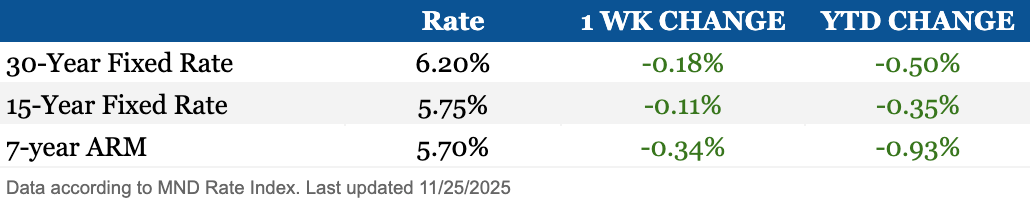
This week, weaker jobs data drove a sharp drop that pushed mortgage rates to their lowest levels since late October and near three-year lows.
Regulations Update
Atlanta City Council rejected a proposed ban on STR’s in northeastern Buckhead, preserving economic opportunities for hosts
Aspen, Colorado approved amendments streamlining permit renewals by reducing paperwork and introducing 90-day temporary permits for new owners to honor existing bookings
Green Bay, Wisconsin rejected the proposed 180-day annual cap after owner pushback on income impacts, but retained consideration of a three-strike nuisance policy
See this weeks full regulations report here: (The Host Report)